 Museum of Jewish History

Inici Institute of Studies Info capsules
Info capsules
Did you know that in the Jewish quarter of Girona…?
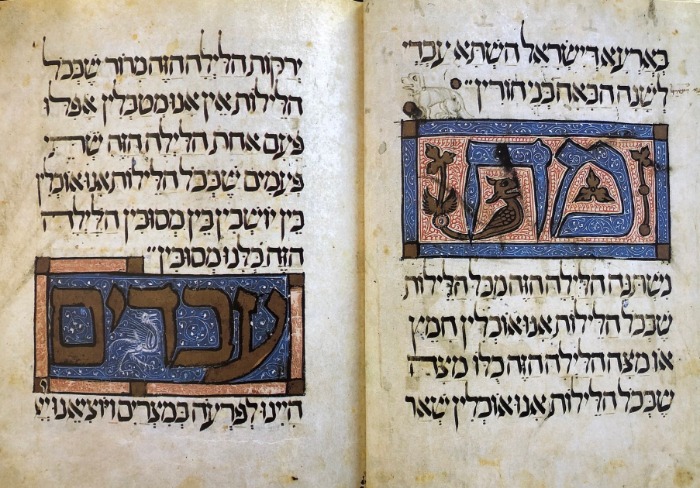
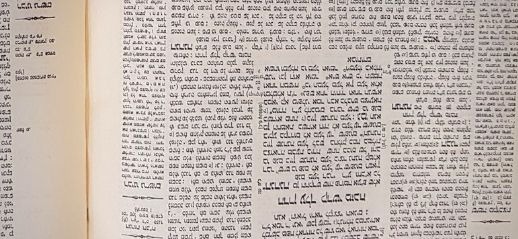
- ... people used to read a book called Haggadah during Jewish Passover celebrations?
- ... families had a special meal for Pesach?
- ... people spoke Catalan?
- ... its inhabitants didn't identify themselves as Sephardic?
- ... women and men weren't allowed to sit together in the synagogue?
- ... the community had at least two synagogues in the city?
- ... the community used the Arab Baths as a mikveh?
- ... people purchased and sold lands, houses and other properties to both Christians and Jews?
- ... provided the framework where Jewish life could take place?
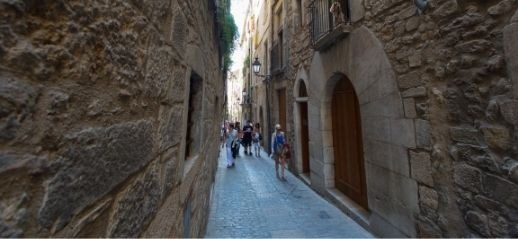
- ... Força Street has not always had this name?
- ... that a religious text called Talmud was studied?
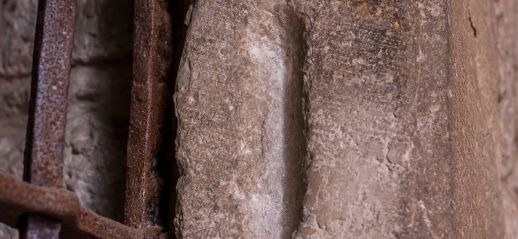
- ... the homes of Jewish families were only identifiable by a single physical element?
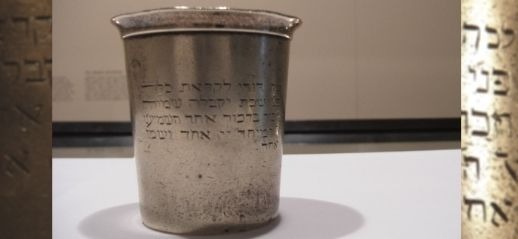
- ... Jewish families celebrated the Shabbat?
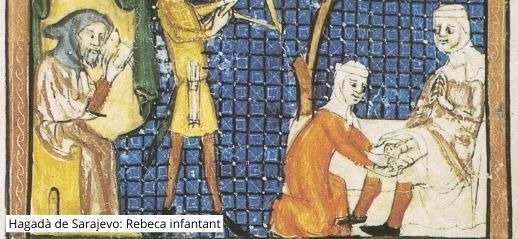
- ... the birth had a life event Celebration called vijola?
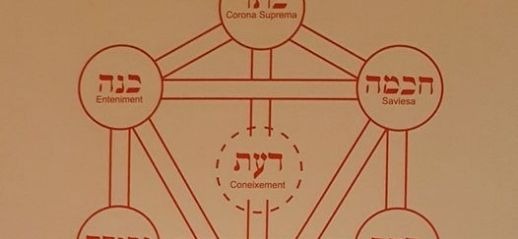
- ... the wisest Jews studied the Kabbalah?

List of outstanding figures in the history of Judaism in Girona
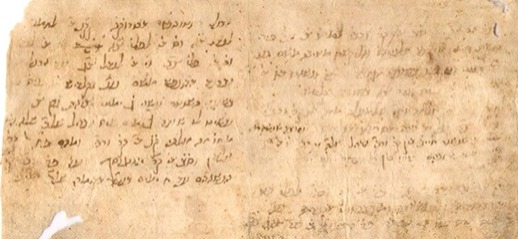
Rahel
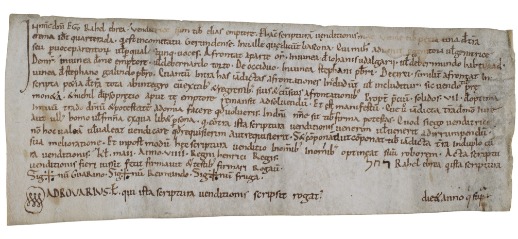
Rahel was a Jewish woman who in 1040 sold in her own name a vineyard that she had inherited from her parents, situated outside the city walls near the abbey of Sant Daniel. She signed personally, in Hebrew, the deed for the sale of the land to Elies, a Christian. Since Rahel apparently knew how to read and write, a rare ability at the time, this enabled her to sign the deed of sale in her own hand. Most significant of all, however, is that Rahel acted on her own behalf and in her own name, and did not require male authorization to conduct a legal and legally recognized transaction concerning her own property. Hers is the oldest recorded signature in Hebrew in the city's history.
Azriel of Girona
A cabbalist and philosopher, he was a very well-known member of the cabbalistic circle of Girona, and was both a direct disciple of Isaac the Blind and the philosophical master of Mossé ben Nahman. Spoke several languages. Noteworthy among his large number of writings is the Shaar ha-Shoel, an intelligible explanation of the theory of the ten sephirot in the form of questions and answers following the rules of logic, intended as an initiation for beginners. Other writings include Commentaries on the Sefer Yetzirah or Book of Creation, on the Aggadot of the Talmud, and on the Daily liturgy. In the latter case it can be noted as a curiosity that the work includes several Catalan words written in Hebrew characters.
Meshullam ben Selomoh de Piera
A cabbalist, poet and philosopher. Also known as Vides of Girona, he was a friend of Mossé ben Nahman and Azriel of Girona, and together with them was one of the leaders of the Jewish community in 13th century Girona. Formed part of the city's circle of cabbalists. He used poetry to express his philosophical ideas, and was against the philosophy of Maimonides. He wrote two poems dedicated to Mossé ben Nahman, whom he looked upon as a great sage and master.
Mossé ben Nahman
A philosopher, cabbalist, talmudist, poet, physician and rabbi, he is the most important and outstanding figure in the Judaism of the Iberian peninsula in the 13th century, and was the greatest talmudic authority of his generation. Known to his contemporaries as "the Master of Girona" or "Ramban", he is referred to today as Nahmanides or as Bonastruc ça Porta.
He was born in Girona in 1194, and died in the Holy Land in 1270. He was the rabbi of Girona and the keenest intellect and spiritual leader of the whole of Catalan Judaism. He was the most illustrious and prestigious member of the city's cabbalistic circle. In 1263, summoned by King James I of Aragon, with whom he had ties of personal friendship, he defended Jewish beliefs against Pau Crestià, a Jewish convert to Christianity who was confessor to the King, in the so-called Disputation of Barcelona. Shortly afterwards he left voluntarily for Jerusalem so as to comply with the Talmudic precept to "die at the mother's bosom". In 1270 in the city of Akko, he preached a New Year sermon which is still read in some synagogues all over the world even today.
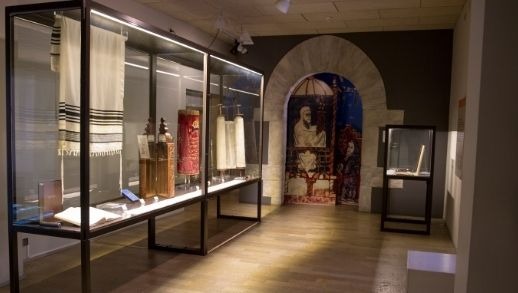
Shortly before his death, he wrote a number of letters to his children in Girona, in which we can see how much he missed his family and the city. His personal seal in bronze was unearthed in the 1970s near Akko, and its inscription reads: "Mossé, son of Rabbi Nahman, of Girona, have courage!". A copy of the seal can be seen in the Museum of the History of the Jews.
Among his works that are particularly outstanding for their exceptional quality are his Commentary on the Torah, the Torat ha-Adam, various Talmudic treatises, monographs about Jewish legal terms, and his poems, with their profound and cryptic content.
Astruc, Mossé and Jucef Ravaya
Members of one of the most powerful Jewish families in the history of Girona, they each held high office in the royal and local administration in the late 13th century. They had enormous influence both within the Jewish community and in the general administration of the kingdom. The father, Astruc Ravaya, was the King's Bailiff for Girona and district, having succeeded his son Jucef Ravaya in this post. His other son, Mossé Ravaya, was Bailiff-General of Catalonia, and as such signed the Royal Charter of Palamós in the name of the King in the late 13th century.
Bonafilla
A member of the Ravaya family, one of the most important and powerful families in 13th century Jewish Girona. She was a businesswoman who negotiated sales and loaned money against the payment of interest, all in her own name and at her own risk. In April 1288, she was accused of fraud before the ecclesiastical courts by a Christian resident of La Bisbal. Judged by the Bishop of Girona, she had her sentence commuted after paying bail to the value of 260 sous in the coinage of Barcelona.
Jacob ben David Bonjorn
A scientist and physician. The son of Ester Caravida and David Bonjorn de Barri. Court physician and astronomer to King Peter IV "the Ceremonious", he calculated astronomical tables commissioned to him by the King in 1361. He lived in Girona and Perpignan.
Ester
The daughter of Astruc Caravida, a powerful Jew of illustrious lineage, and of Bonadona. Her parents arranged her marriage to David Bonjorn de Barri. During her marriage she lived in Perpignan. Her husband was apparently a bad-tempered individual who treated her so badly that she repeatedly asked him for a divorce. The royal astronomer, however, refused to give her the necessary document of repudiation or to return her dowry. In order to gain her freedom and recover her personal and family assets, Ester caused her husband's books and tools to disappear from his study. She thus provoked him to repudiate her, since only the husband could request and grant a divorce. She then returned to Girona and had to struggle for a long time more to recover her dowry, which the husband refused to return. For this reason she named a lawyer to represent her. It would seem that she finally succeeded in obtaining the full return of the assets that had been given as her dowry.
Nissim ben Reuben Gerondi
A Talmudist, physician, jurist and rabbi (i.e., spiritual leader) of the Jewish community of Saragossa in the 14th century. Originating from a family from Cordoba, he was born and trained in Girona, although he lived almost all his later life in Barcelona, where he was a spiritual master and leader and directed the Talmudic school created by the Grand Rabbi Shlomo ben Aderet, a disciple of Nahmanides. He was known for his rationalist opinions, contrary to the mystical currents of the Kabbala. He wrote a commentary on the Halakhot of Yitshaq Alfasi, sermons, and a number of Responsa, used as an instrument of consultation by numerous communities all over the world.
Blanca
A Jewish woman who had converted to Christianity and was the widow of the convert Bernat Falcó, the Falcó family being one of the most powerful families in the Jewish and convert community in the Girona of the 14th and 15th centuries. Blanca made her will in 1437, before a Christian notary. Nothing in her will indicates her Jewish ancestry, and she shows herself as a devout Christian and a lady of the Girona middle class of her day. A reference, however, to her son David, who is Jewish, and to the inheritance that she leaves him in her will provide irrefutable proof of her own Jewish past. She was a woman who was rich and influential, and she divided her inheritance between her children: three sons (two of whom were converts and one who was a Jew) and two daughters, who were both converts and married to converts in Perpignan and Castelló d'Empúries.
Astruc Abraham des Portal
A Jewish doctor, married to Na Bonadona, a Jewess from Girona, and owner of a House in the call (Jewish quarter) in 1492. As a result of the Decree of Expulsion, he sold the property for 60 pounds, and most probably left Girona with his family at the end of the summer of that fateful year. He was a descendant from a lineage of Jewish doctors whose presence in the region of Girona is documented since the 1320s (the first to be mentioned in a document being Mossé Abraham des Portal, who practiced as a doctor in Girona and Besalú in 1324), and who could look back on five generations dedicated to the medical arts.
Recently the rests of a room of his house, probably the family residence, have been discovered at the call of Girona, and they could be identified thanks to the documentation kept at the archives of the city.
Astruc Abraham des Portal had been a grandson, or great-grandson, of the Jewish doctor Natan Mossé des Portal, and, just as him, was probably related to the important lineage of doctors, the family Nathan d'Arles. From his grandfather the inventory list of the books he had in his personal library in 1410 has been presered. Among the 127 titles there were many related to medicine and astronomy.
Glossary
Pesach
The Festival of Passover (the Jewish Easter). It begins after dusk of the 14th of Nisan (end of March or April in the Gregorian calendar), and it last eight days (seven in the land of Israel and in Reform Judaism).
Call (Jewry)
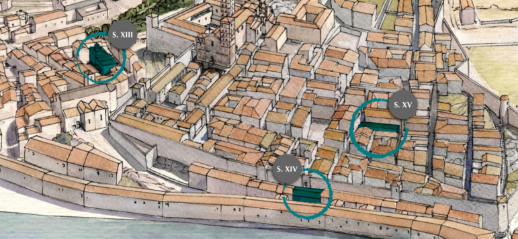
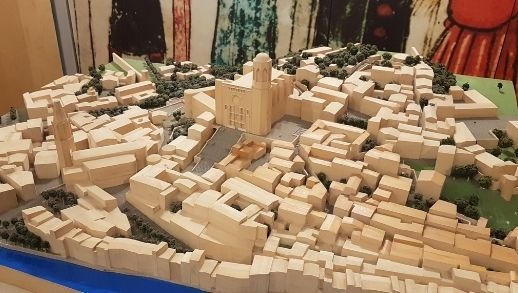
The Jewish quarter in the towns and villages of medieval Catalonia. The Catalan word Call derives from the Latin callis. In Lleida, it was referred to as the cuirassa.
Aljama
A characteristic institution of the medieval Hispanic kingdoms, responsible for the government and internal administration of Jewish communities. An organ for the internal government of medieval Jewish communities.
Bailiff
The lord's representative for financial administration. In the old Crown of Aragon, royal official in charge of administering the king's patrimony.
Bet Din
A Jewish court made up of two or three judges charged with judging the internal affairs of the community. It was governed by Jewish religious law.
Kabbalah
A current of mystical and esoteric philosophy, characteristic of medieval Judaism, based on a belief in divine emanations (sephirott) which configure the created universe. Kabbalah originated in medieval Provence (Narbonne, Lunel) and arrived in Girona in the 12th century, where it came to attain a very high degree of sophistication.
Kosher
This means suitable. It designates food considered pure and which may be consumed according to Jewish law: the meat of all ruminating mammals that have cloven hooves, and fish with fins and scales. Almost all birds may also be eaten, except for birds of prey. Reptiles and insects are also forbidden.
Council
The governing body administering a town or a community.
Convert
A Jewish man or woman who has been received into the Christian faith.
Menorah
The seven-branched candelabrum, symbol of Judaism.
Pentateuch
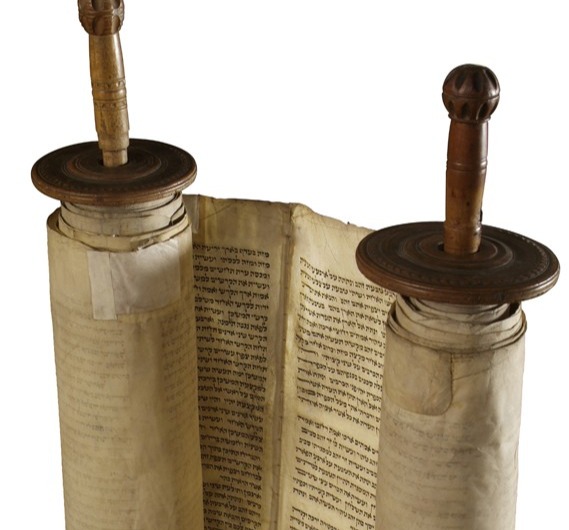
The first five books of the Bible, which form the Torah (or Jewish law, by antonomasia).
Prohoms (Great men)
Municipal leaders.
Rabbi
A man educated and ordained in the Law, and who may lead a community spiritually. Literally means "Master".
Sepharad
The name that the Jews gave to the Muslim and Castilian Christian kingdoms of the Iberian Peninsula. In the modern language, it is used to refer to Spain.
Sephardi
A Jew of Hispanic origin.
Torah
The Jewish Law, consisting of the first five books of the Bible. In Judaism, this is the Law that God gave to Moses on Mount Sinai.
Shechita
The ritual sacrifice of animals, with their throats cut facing towards Jerusalem, so that their flesh may be pure and kosher.
Diaspora
Dispersion. Word of Greek origin, meaning exile, that designates the dispersion of Jews around the world.
Shabbat (Saturday)
The day of weekly rest, during which it is not even allowed to light a fire or engage in any type of work. A day dedicated to prayer and reflection. It begins at dusk on Friday.
Mezuzah
A roll of parchment on which are written the Jewish prayer Listen Israel and Shaddai (the word for Almighty). It is placed in a tube or box and embedded in the right-hand doorpost of Jewish homes. When entering or leaving, Jews must place their hands over it, remembering that God gave the Law to their people.
Synagogue
A word of Greek origin that means "meeting". The place where Jews meet to study, pray and learn the law of God. In medieval Catalonia, synagogues were referred to as escoles ("schools").
Collection
An inter-community Jewish organization that combined various aljamas with a financial aim in mind: the allocation, imposition and gathering of taxes for delivery to the king.


Patronat Call de Girona • C. de la Força, 8 - 17004 GIRONA • Tel. 972 216 761 • callgirona@ajgirona.cat