 Museum of Jewish History

Inici Exhibitions Core exhibition Highlighted items
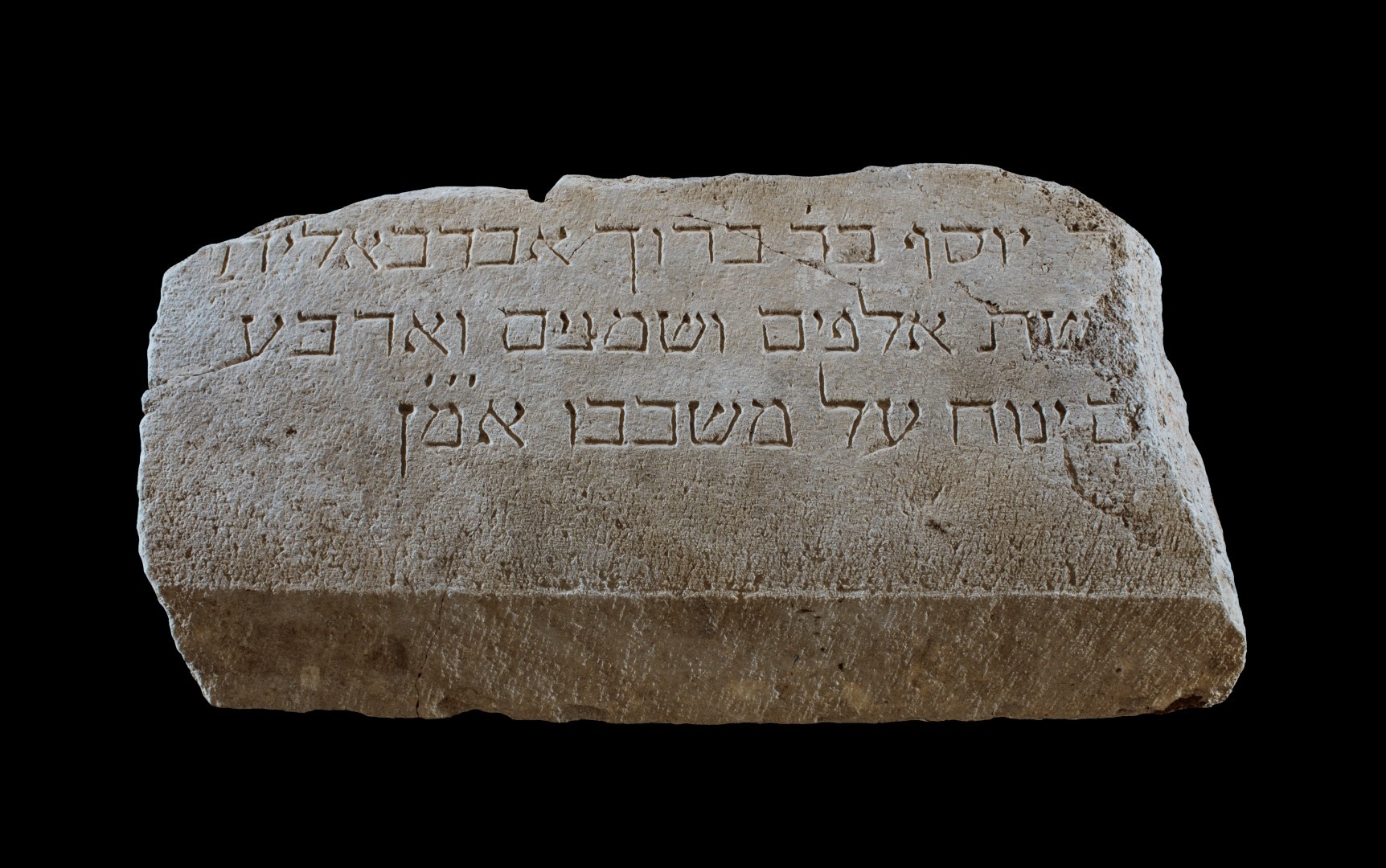
Tombstone of Joseph, son of Barukh Abrabalya
| Provenance | Girona |
| Chronology | 1323‑1324 (5084) |
| Material | Limestone |
| Record | MHJ080 |
| Section | Cemetery |
Neither the son nor the father are documented. The name Abrabalya is the Hebrew form of Ravalla, Ravaia or Ravaya. This family, originally from Castile, settled in Girona and Castelló d'Empúries; later they spread to various Catalan towns. They achieved great power not only within the Girona community but also at the royal court. The most prominent members reached high positions in the 13th century: Astruc Ravaia was appointed bailiff of Girona, exempt from contributing; his son Jucef was royal bailiff in Besalú and Girona, administrator of the royal patrimony, royal counsellor and first royal treasurer; his brother Mossé was general bailiff of Catalonia, collector of the bovatge tax and seller of royal revenues. In the 14th century, several members of the Ravaia family are recorded in connection with houses they owned in Girona's Call. Abraham Ravaia owned a house on Carrer de la Força, and the city leaders (known as jurats) bought stone from him to use in the construction of the city wall. Astruc Caravida had purchased the houses of Issac Ravaia (with rights to light, load, water and a courtyard); his widow gave them to their daughters, Bonafilla and Ester, who sold them to Bonastruc Vidal. Shortly afterwards, the city jurats had them demolished.
Translation:
... Rabbi Joseph, son of Rabbi Baruch Abrabalya
...year five thousand eighty-four
... may peace come upon him. May he rest in his grave. Amen.


Patronat Call de Girona • C. de la Força, 8 - 17004 GIRONA • Tel. 972 216 761 • callgirona@ajgirona.cat