 Museum of Jewish History

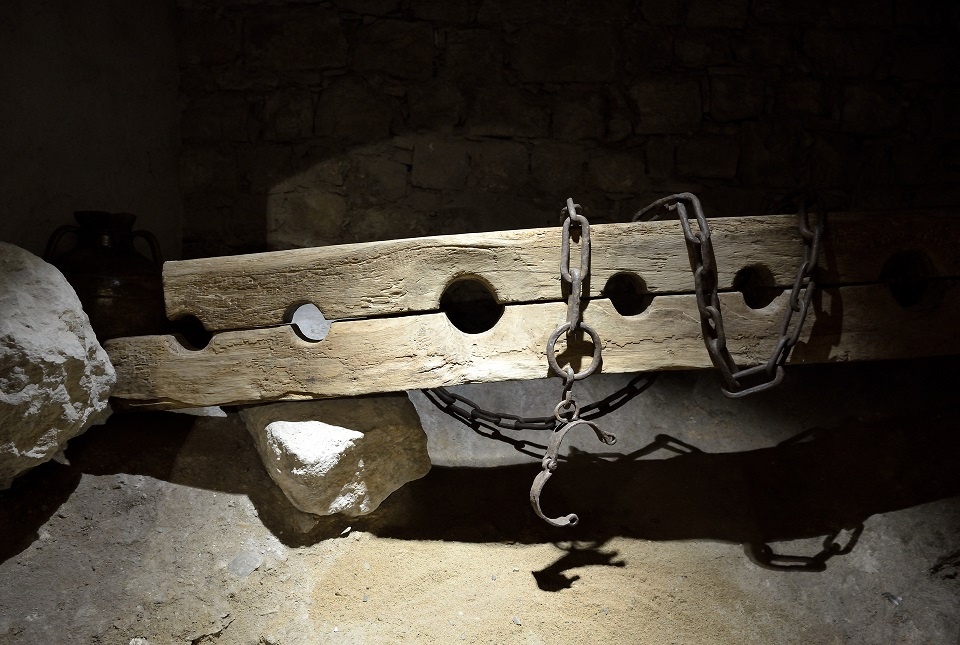
Stocks
| Origin | Foixà Castle |
| Chronology | 14th century |
| Material | Wood and iron |
| Registration | MHJ143 |
| Section | Converso society and Inquisition |
An inquisitorial process began with a denunciation which, always anonymous, alerted the inquisitors to suspicious behaviour that was considered an offence against Church doctrine. This set the inquisitorial machinery in motion, initiating a detailed investigation of each person denounced, who would usually end up being arrested. Once the first interrogation had taken place, the accusation was formally brought.
In the medieval and early modern periods, torture was practised not only in inquisitorial courts but also in all other courts. People were arrested and shackled, and prison conditions, regardless of the institution that ran them, were inhumane. Finally, the court publicly pronounced its sentence during a highly dramatic ceremony known as an auto-da-fé.
In the photograph, you can see a wooden and iron stocks, 14th century (?), originating from Foixà Castle, held on deposit by the Girona Provincial Council Art Collection and displayed on the second floor of the Museum of Jewish History.


Patronat Call de Girona • C. de la Força, 8 - 17004 GIRONA • Tel. 972 216 761 • callgirona@ajgirona.cat