
1814-1816

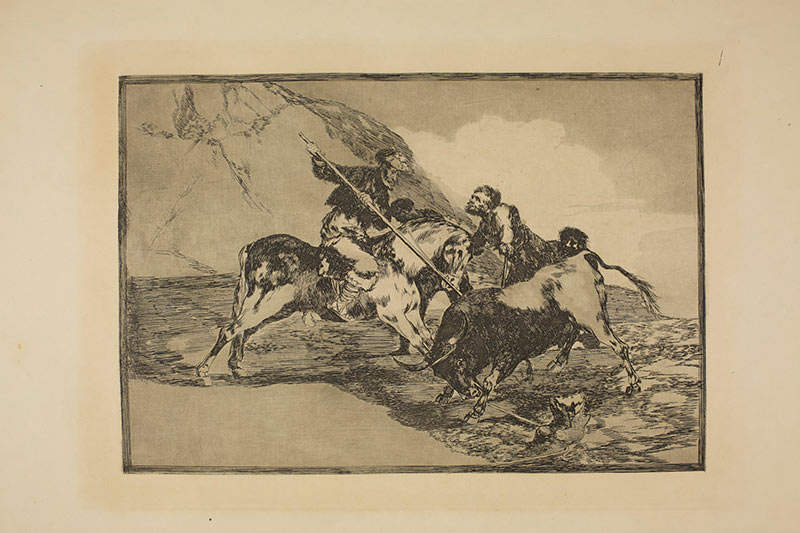
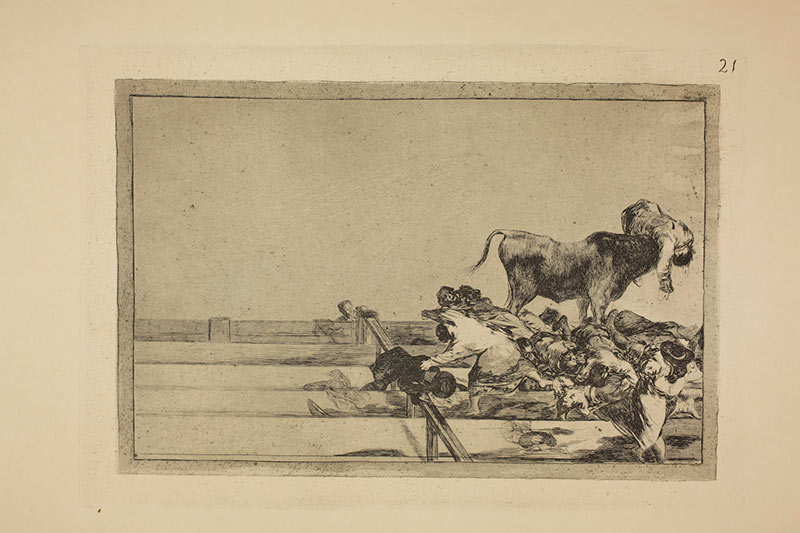
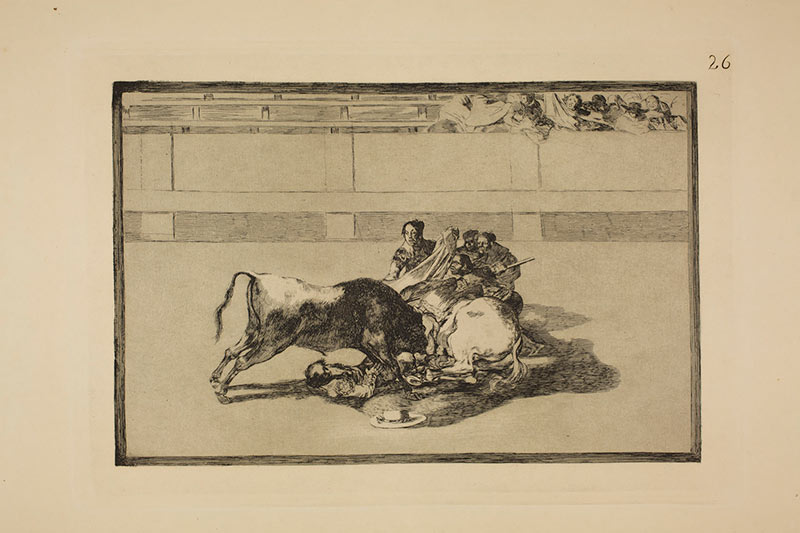
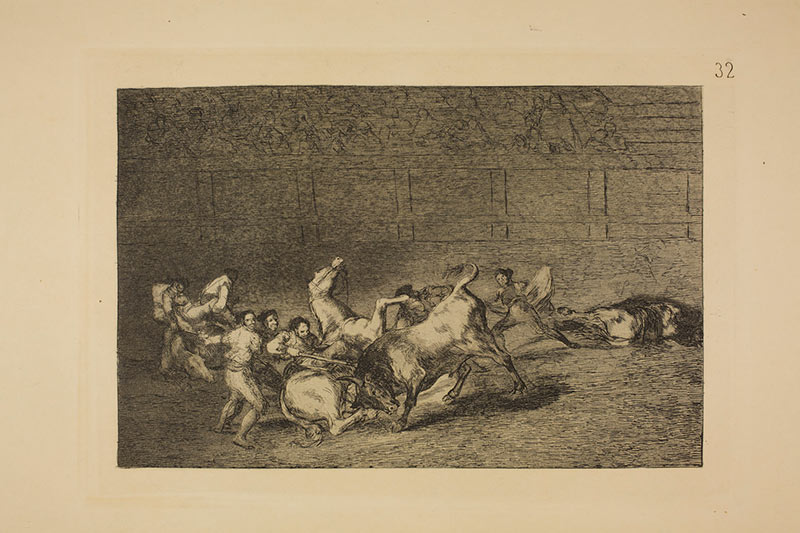
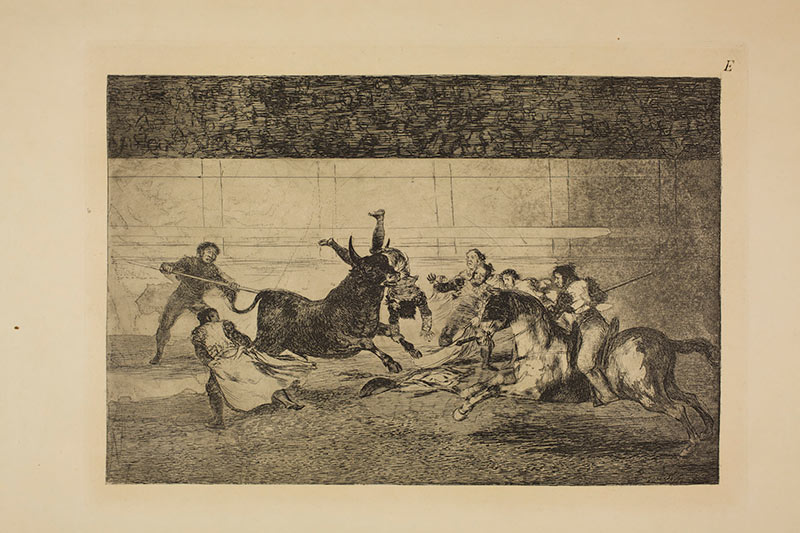
After withdrawing Caprices from sale and to keep Disasters of war unpublished, Goya started working on the series Bullfighting. His subject was a very popular topic in Spain at the time and, for one thing, politically anodyne, which would also keep him out of trouble with various powers and the Church.
Far from the colourful scenes of bullfighting that prevailed at the time, the artist dwells on the history of bullfighting and emphasises the tragic nature of a bullfight. Death and violence are present in all the prints, and the chiaroscuro highlights the drama and tension. The scenes focus on the struggle between animals and men, avoiding the atmosphere of the ring that can be glimpsed only faintly or not at all in some plates.
The series went up for sale in 1816 and, to the surprise of the artist himself, was a commercial failure, unlike the success that his paintings usually met with.
«From Goya's vision of bullfighting springs a bullfight scene which is bewildering, as if invented by the author, with capricious traits identified with the creator of the Caprichos. The most beautiful thing about Goya’s bullfighting is precisely its ghostly quality, a mixture of broken forms and unusual events.»
Ramón Gómez de la Serna, Goya, 1958


Ajuntament de Girona – Museu d'Història de Girona • Carrer de la Força, 27 - 17004 GIRONA • Tel. 972 222 229 • Terms of use