
1815-1819

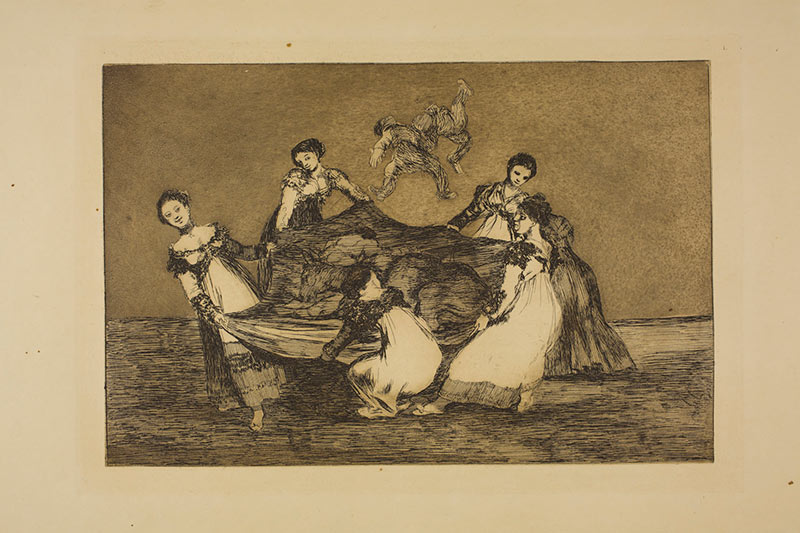
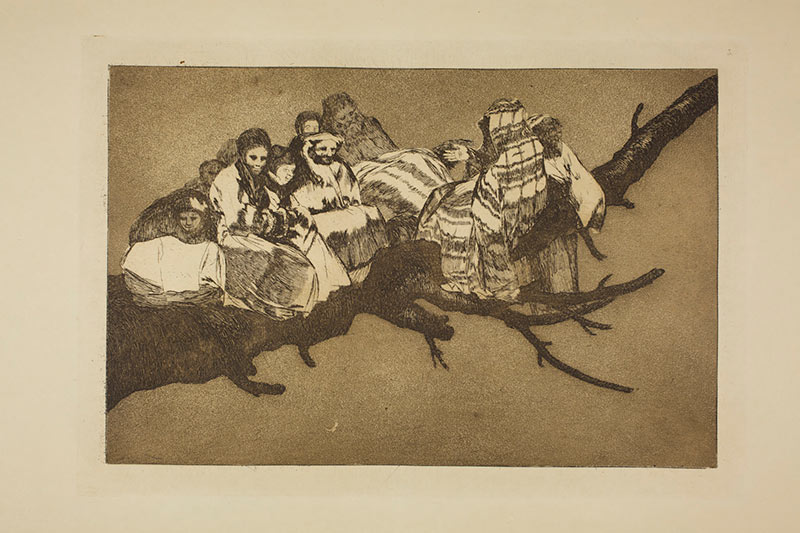
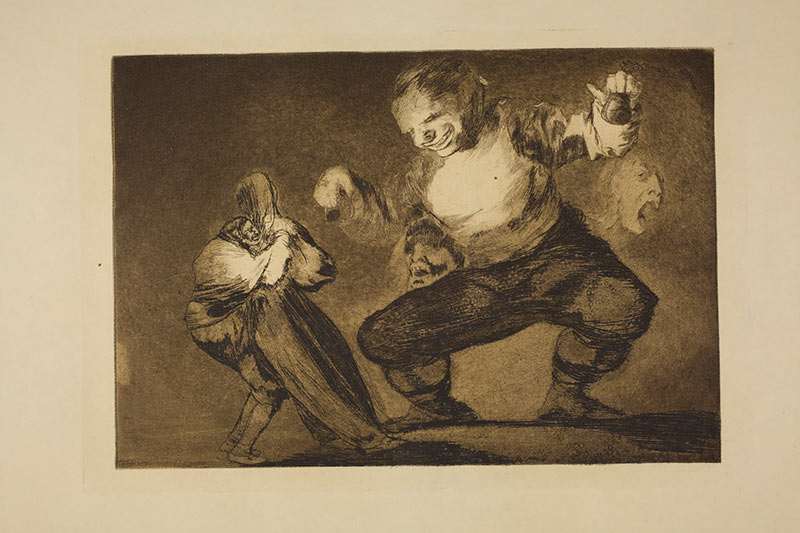
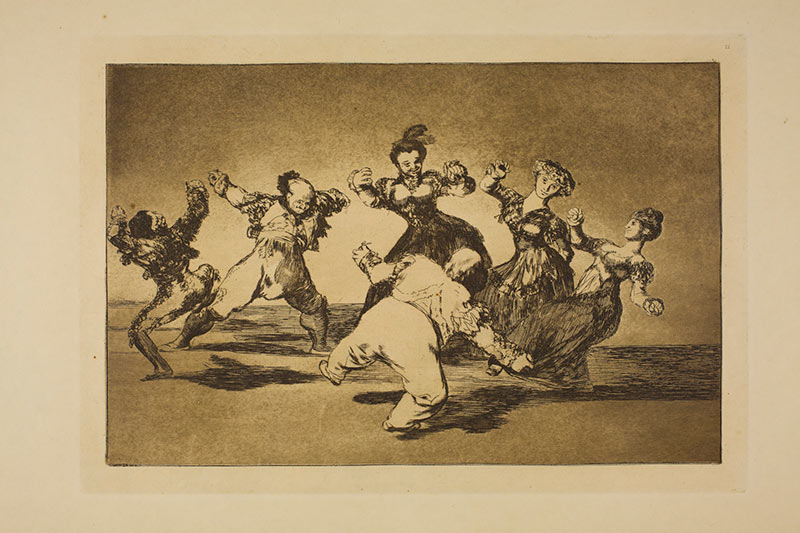
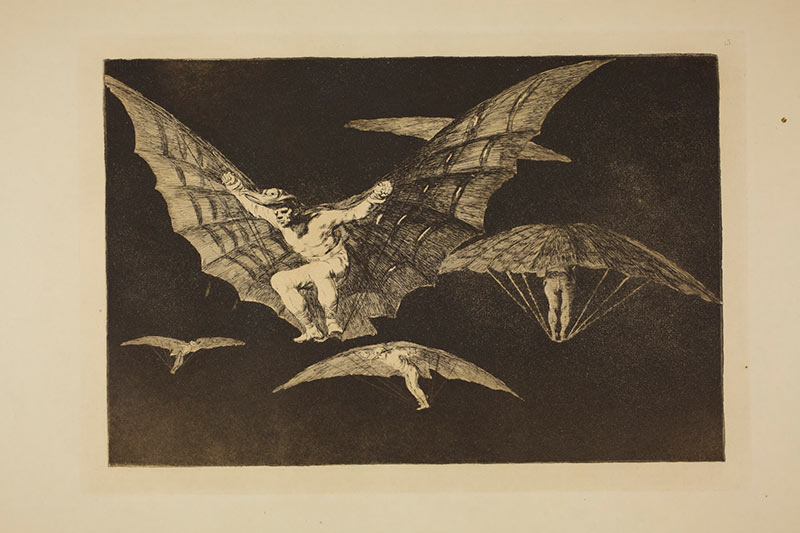
In 1824, at the age of 78, Goya decided to leave for France, following in the footsteps of some of his peers in the art world and other intellectuals. At the Quinta del Sordo, his last Spanish residence, an unfinished series of 18 plates were left behind, along with his Black Paintings on the walls. In 1864, 36 years after the painter's death, the Royal Academy of Fine Arts of San Fernando published what is probably the most disjointed series of engravings of the four collections.
The various interpretations of the series all have their origin in an initial misunderstanding: when the Academy prepared the first edition and published them as Proverbs, they ignored the set's intended arrangement, and also the fact that the artist had titled them Nonsense in the workshop proofs.
What is clear is that, in Nonsense, which portrays the country's decadence, the modern artist who was taking shape in the previous engravings now fully emerges.
One hundred years after that first edition, Tomás Harris, a leading authority on Goya, in the catalogue raisonné of the painter's graphic work tries to link each print with a Spanish proverb, a fact that further complicates the reading and in turn fuels the mystery and enigma of the set.
«All the Nonsense images exude horror.
Inhospitable areas of desolate solitude
or impenetrable skies filled with the darkness of night
constitute the backdrop»
Sigrun Paas-Zeidler. Goya. Radierungen [Goya. Aguafuertes], 1978


Ajuntament de Girona – Museu d'Història de Girona • Carrer de la Força, 27 - 17004 GIRONA • Tel. 972 222 229 • Terms of use