
1797-1799

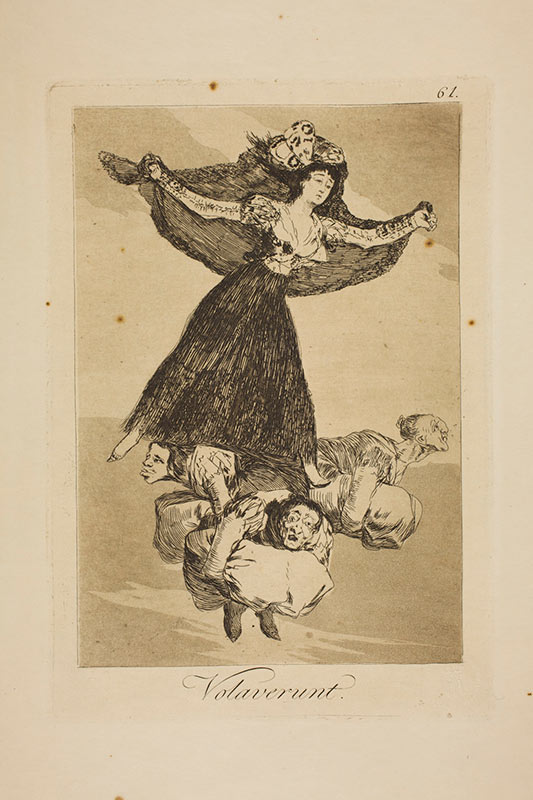
In 1793, Goya suffered a serious illness that left him deaf. Some historians and scholars argue that this event marks a turning point in his production. The illness paradoxically allowed him creative freedom and led him to explore a new thematic line that departed from his previous work, beginning in 1797 with Caprices.
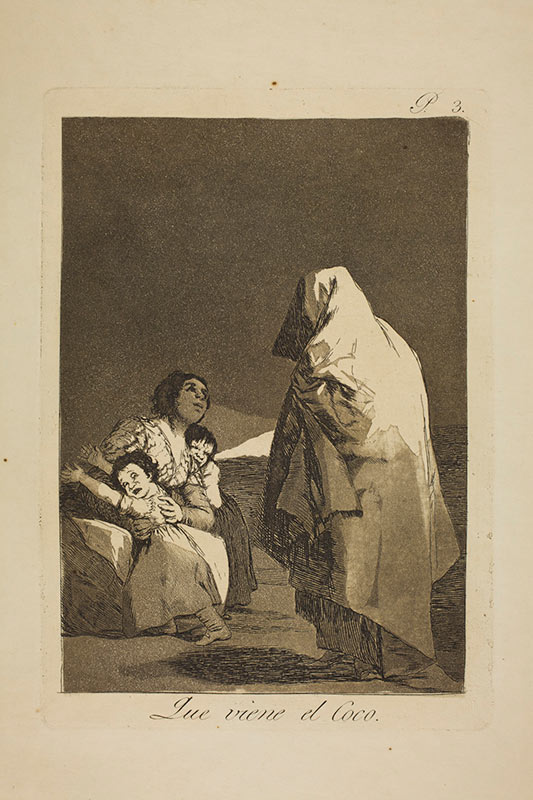
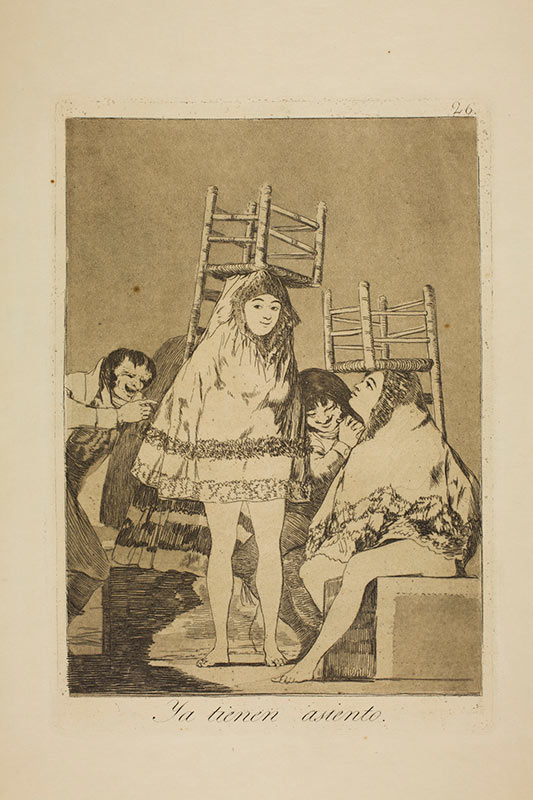
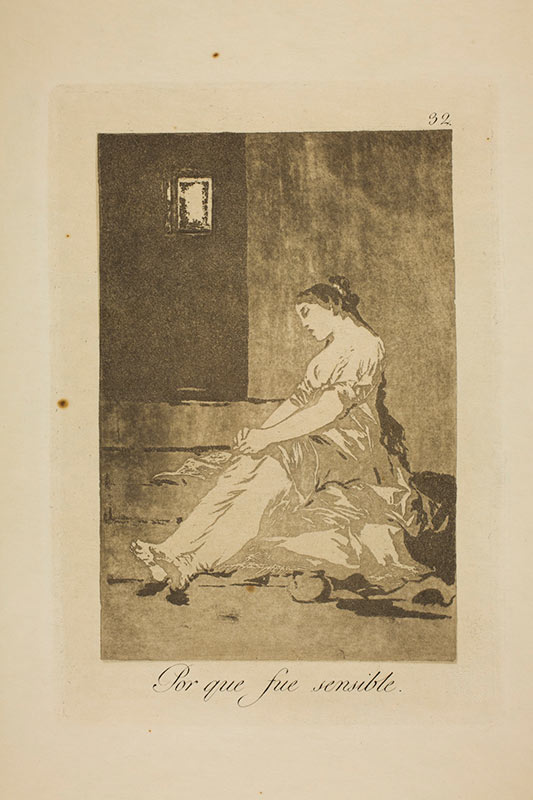
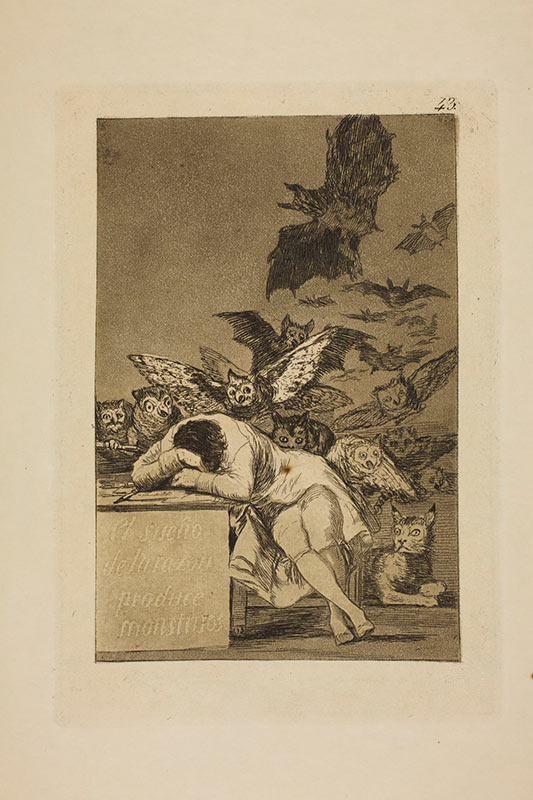
In the 18th century, the word 'capricho' ('caprice' or 'whim') was used to refer to works created by artists on their own initiative, without being commissioned. In the Caprices, Goya criticises the society of the time by presenting distorted, exaggerated situations that his enlightened peers also denounced.
Thematically, it functions as a realist ensemble that depicts ignorance and misery, the corrupting influence of power, the abuses of ecclesiastical institutions, illiteracy, inequality and superstitions, and that closes with a fantastical assembly of images with grotesque and monstrous characters, witches and phantasmagorical beings.
The release of the series caused a great scandal among Madrid society, to the point that the artist was forced to withdraw it from sale a few days after making his announcement, fearing reprisals from the Inquisition.
«When he finished engraving his collection of whimsical prints at the end of the century, Goya was already turning his back on the 18th century and facing the 19th century, so that the Caprichos offer a recapitulation of the way of thinking and feeling of a given era, that is to say, an epilogue to the Enlightenment, while at the same time serving as a prologue or rather a preview of the new era to come»
Edith Helman, Los "Caprichos" de Goya, 1971


Ajuntament de Girona – Museu d'Història de Girona • Carrer de la Força, 27 - 17004 GIRONA • Tel. 972 222 229 • Terms of use