1810-1815

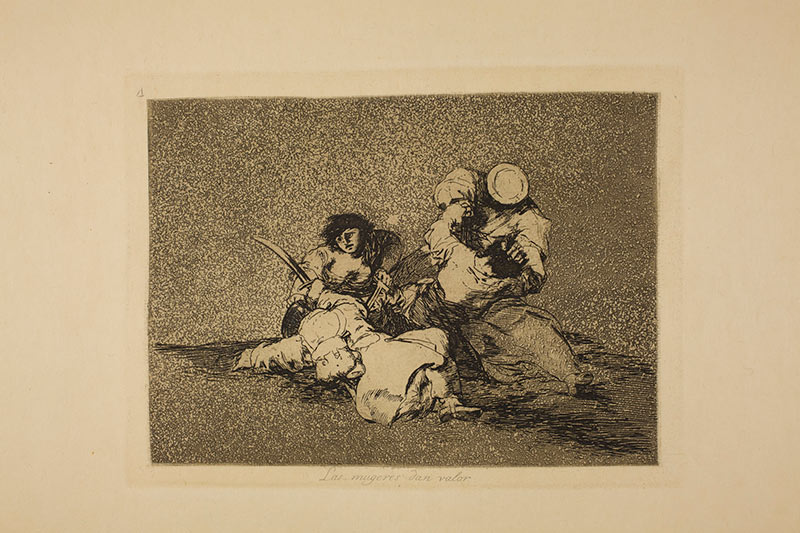
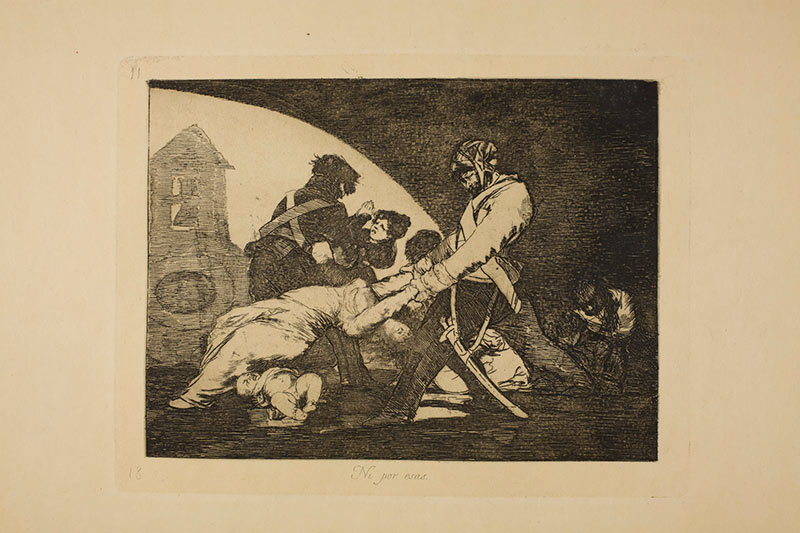
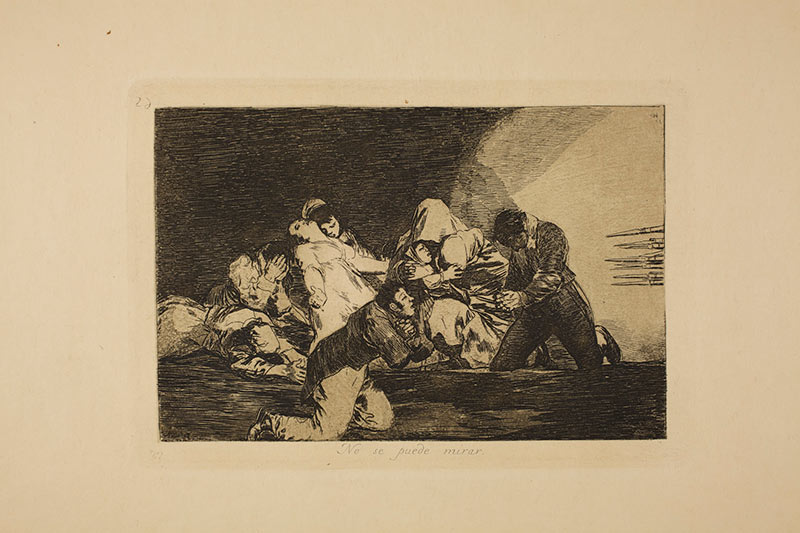
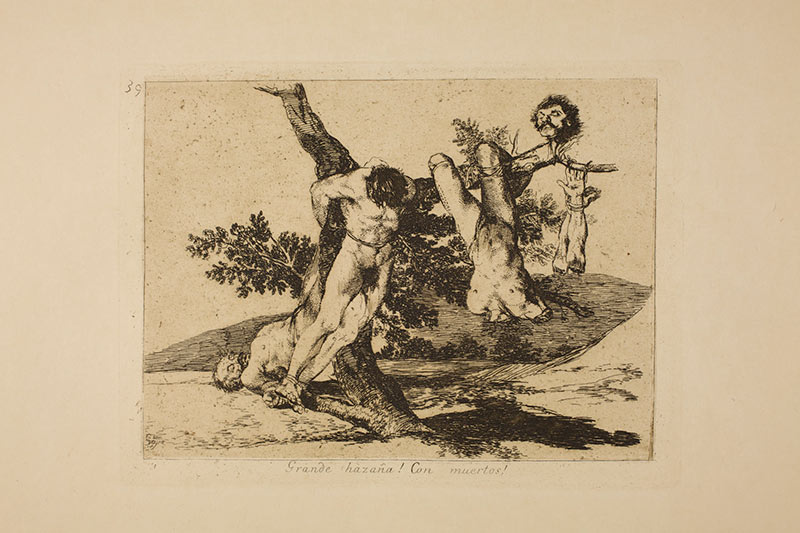
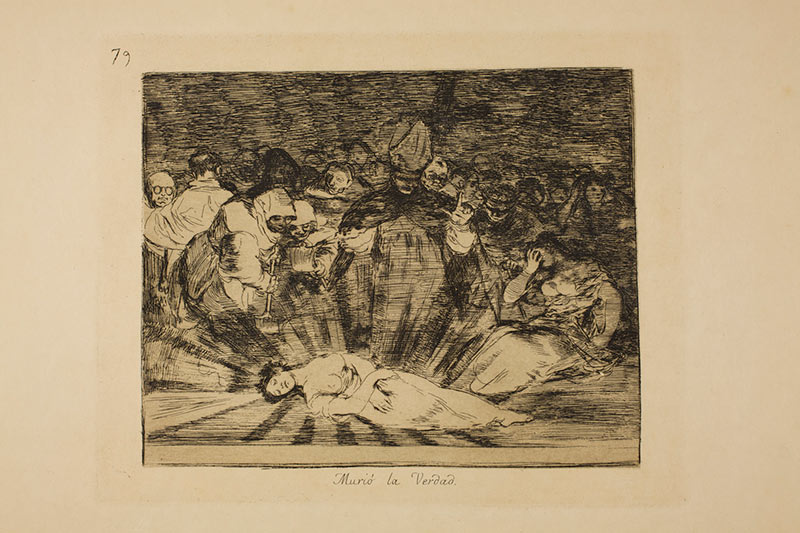
This series, consisting of 80 plates, was not published until 1863, 35 years after the artist's death. With Disasters of war, Goya became a chronicler of the Peninsular War (1808-1814), the Iberian theatre of the Napoleonic Wars.
The series does not lack for detail when showing the violence and cruelty of the conflict, with depictions of piles of corpses and mutilated bodies, abuse and rape, in scenes that show the ravages of war. The images are accompanied by eloquent quotes that emphasise the drama, which often finds its form in the figure of a woman. However, these prints transcend the historical testimony of a specific conflict, and can be read today as a universal cry against violence and war.
Considered the least thematically unified series of the four, Disasters (which was initially titled Terrible consequences of the bloody war in Spain with Bonaparte. And other emphatic whims) ends with the 'Emphatic whims', an anticlerical and critical compendium of the absolutist regime, which connects with the allegorical images of the Caprices series
«It is cold horror, devoid of heroism or even sublime breath, death is a horror that we face directly, almost by surprise, we are helpless observers of the tragedy»
Coca Garrido. "Caprichos": Pinturas y Grabados de Goya [‘Caprices’: Paintings and Engravings], 1998


Ajuntament de Girona – Museu d'Història de Girona • Carrer de la Força, 27 - 17004 GIRONA • Tel. 972 222 229 • Terms of use